
Artificial Intelligence (AI) has evolved through two dominant paradigms, symbolic reasoning and neural networks, each offering distinct strengths yet facing significant limitations when pursued in isolation. Symbolic AI, rooted in logic and explicit rule-based systems, excels in interpretability and structured reasoning but struggles with ambiguity and scalability. Conversely, neural networks demonstrate remarkable pattern recognition and learning capabilities, yet often operate as “black boxes,” lacking transparency or contextual understanding. As AI systems increasingly permeate high-stakes domains like law, healthcare, and governance, the need for models that can both learn from data and reason about it has become critical.
Neuro-Symbolic AI, a hybrid approach that seeks to bridge the gap between data-driven learning and logical inference. It integrates the perceptual power of neural networks with the structured reasoning of symbolic systems. Neuro-Symbolic AI promises to move beyond mere correlation toward genuine machine understanding. This convergence represents a transformative frontier in AI research, offering the possibility of systems that are not only accurate and adaptive but also explainable, trustworthy, and aligned with human reasoning. In an era where algorithmic accountability and ethical AI design are under global scrutiny, Neuro-Symbolic AI may well define the next phase of intelligent automation and computational logic.
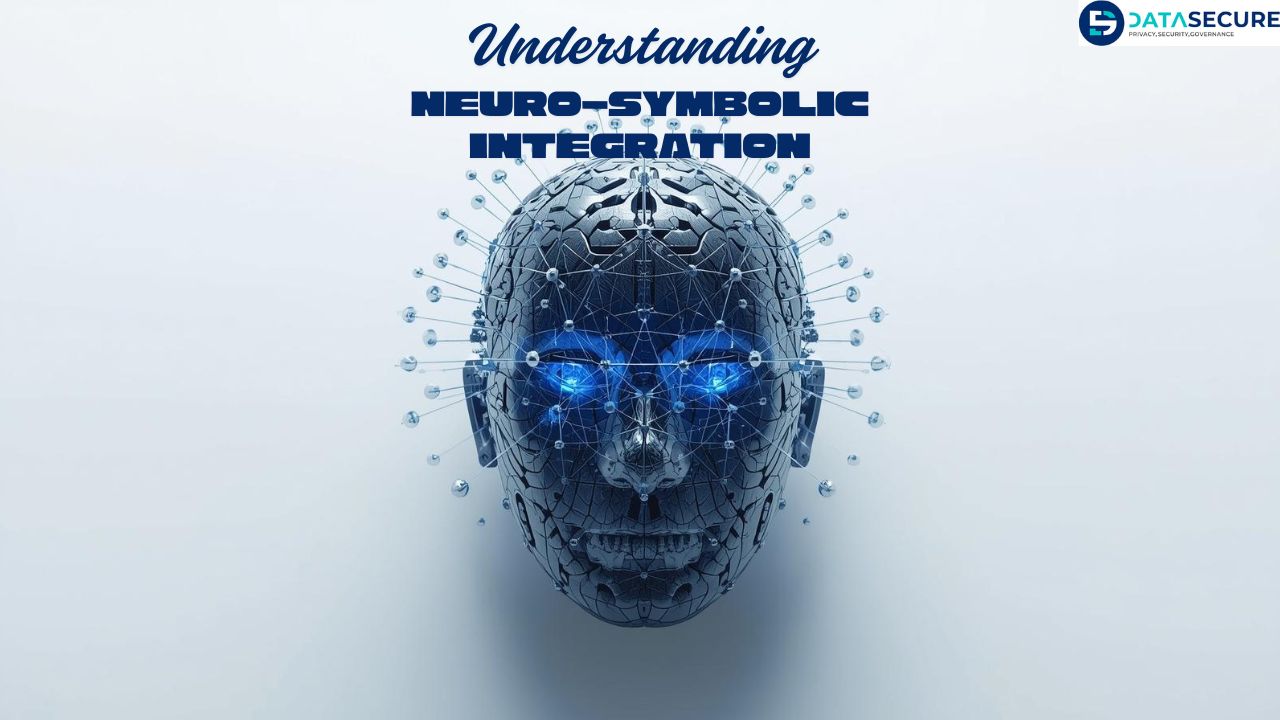
Symbolic AI, at one point, was a major focus in the early stages of artificial intelligence research. It relied on formal logic and rule-based reasoning to represent knowledge through facts, relationships, and structured rules. While such systems excel in interpretability and deductive reasoning, they face difficulties learning from data or handling ambiguity. Neural networks, on the other hand, learn from large datasets and identify intricate patterns, achieving breakthroughs in image recognition and natural language processing. However, they often operate as “black boxes,” producing accurate results without transparent reasoning. Neuro-Symbolic AI seeks to unify these paradigms by combining the learning capabilities of neural networks with the structured decision-making of symbolic reasoning systems. In this hybrid framework, neural networks process unstructured data, such as text, speech, or images, while symbolic logic provides the ability to reason, explain, and generalise. This integration enables AI to perform complex cognitive tasks, including commonsense reasoning and contextual understanding, that neither paradigm can achieve alone. For instance, a neuro-symbolic system analysing medical images can leverage neural perception to detect anomalies and apply symbolic rules to ensure that its conclusions align with established diagnostic principles, thereby enhancing both accuracy and explainability.
Neuro-symbolic integration is reshaping both general and scientific applications by merging the adaptability of neural learning with the structured logic of symbolic reasoning. In business and finance, organisations such as Salesforce and JPMorgan Chase have begun deploying neuro-symbolic systems in their 2025 platforms to enhance transparency in automated decision-making. These systems not only generate accurate, data-driven recommendations but also provide explainable justifications for their outcomes, addressing one of the core limitations of black-box neural models. Similarly, the education sector is leveraging neuro-symbolic AI to develop personalized learning pathways. Platforms like Coursera now combine neural data analysis of student performance with pedagogical rules to adapt content delivery, reportedly improving engagement and comprehension rates. In scientific domains, this hybrid approach is driving progress in fields where both data analysis and domain reasoning are essential. Researchers at CERN, for instance, have utilized neuro-symbolic models to interpret complex particle collision data, improving the detection of rare physical phenomena by integrating neural pattern recognition with symbolic representations of established physical laws. In healthcare, Stanford’s 2025 study published in Nature demonstrated that neuro-symbolic models could outperform deep learning systems by integrating clinical guidelines with diagnostic imaging, resulting in a significant improvement in accuracy and interpretability. Meanwhile, the European Space Agency’s use of hybrid AI for climate modelling has shown that combining satellite data analytics with symbolic atmospheric physics leads to more precise and comprehensible predictions. Collectively, these developments illustrate that neuro-symbolic AI is not merely an academic construct but a transformative paradigm capable of enhancing accuracy, accountability, and human trust across diverse real-world domains.
A striking demonstration of neuro-symbolic AI in action can be seen in IBM’s Project Debater, one of the most sophisticated systems to merge neural learning with symbolic reasoning. Unlike traditional AI models that merely retrieve or summarize information, Project Debater engages in structured argumentation, analysing claims, counterclaims, and supporting evidence drawn from extensive corpora of text. Its neural networks process unstructured language data, identifying semantic nuances and contextual cues, while the symbolic reasoning layer organizes this information into coherent argumentative frameworks grounded in logic and factual relevance.
This dual process allows the system to debate complex social, legal, and ethical issues, from healthcare reforms to economic policy, by constructing logically sound, data-backed positions. The symbolic component ensures interpretability and rational consistency, whereas the neural layer enables linguistic fluidity and adaptive understanding. Project Debater thus exemplifies how neuro-symbolic integration can move AI toward genuine reasoning, a synthesis of perception, logic, and knowledge representation that could define the next generation of explainable and trustworthy machine intelligence.
While neuro-symbolic AI presents a compelling vision of hybrid intelligence, it remains an evolving paradigm with several theoretical and practical limitations. One major challenge lies in integration complexity, merging symbolic logic, which operates on discrete, rule-based structures, with neural networks that process continuous, probabilistic data. Achieving seamless interoperability between these fundamentally different representations of knowledge often requires intricate architectures and extensive computational resources.
Another concern is scalability. Symbolic reasoning systems struggle to manage the vast, dynamic datasets characteristic of modern machine learning, and embedding logical rules within large neural frameworks can significantly slow down training and inference times. Similarly, developing shared representation learning mechanisms that allow symbols and neural embeddings to communicate effectively remains an unresolved research frontier.
From an epistemic standpoint, data-to-symbol translation introduces ambiguity; determining how and when abstract concepts should be represented symbolically is highly context-dependent and may lead to oversimplification or bias. Moreover, despite their promise of explainability, many current neuro-symbolic models are still difficult to interpret in practice, as the interplay between symbolic and sub-symbolic layers is not yet fully transparent.
Finally, there are implementation barriers: limited availability of benchmark datasets, lack of standardized frameworks, and the need for interdisciplinary expertise spanning logic, cognitive science, and deep learning. These constraints mean that, while neuro-symbolic AI marks a transformative step toward human-like reasoning, its full potential remains largely confined to controlled research settings rather than scalable, real-world deployment.
The advancement of neuro-symbolic AI depends on overcoming the structural challenges that limit its scalability and interpretability. Future research is moving toward the development of differentiable reasoning networks, neural theorem provers, and knowledge graph-augmented models that enable reasoning within continuous, data-driven frameworks. These emerging systems allow symbolic inference to occur within the architecture of neural networks, thus reducing the disconnect between logic-based reasoning and statistical learning.
Leading research institutions, including MIT, Stanford, and DeepMind, are exploring automated knowledge grounding, where symbolic representations evolve directly from data. This marks a shift from manually constructed rule sets to dynamically adaptive reasoning frameworks. Parallel to these developments, the establishment of standardized evaluation benchmarks and explainability protocols is critical to ensure reliability and transparency across applications.
Equally significant is the need for regulatory integration and interdisciplinary collaboration. As neuro-symbolic systems begin influencing high-stakes decision-making domains, such as law, healthcare, and finance, their governance must evolve in tandem. Partnerships between technologists, ethicists, and policymakers will be vital in shaping ethical standards, ensuring accountability, and building public trust in hybrid AI systems.
Neuro-symbolic AI signifies a profound transformation in the evolution of artificial intelligence. It aims to unify the strengths of two historically divergent paradigms by integrating the pattern-recognition power of neural networks with the structured reasoning of symbolic systems. It lays the groundwork for AI that can both learn and reason. This fusion transcends the limitations of black-box neural models by introducing a degree of transparency and cognitive alignment previously unseen in machine intelligence.
Despite its current constraints, the field’s rapid progress suggests a future where AI systems not only predict outcomes but also justify them with logical reasoning. Such a transition marks a movement from computational intelligence toward cognitive understanding, bringing AI closer to the nuanced reasoning capacities of human thought.
Ultimately, neuro-symbolic AI embodies the next frontier in machine cognition, one that holds the potential to redefine trust, accountability, and intelligence itself in artificial systems. Its future rests on our ability to design frameworks that combine the precision of mathematics with the ethics of human reasoning, ensuring that as AI becomes more intelligent, it also becomes more explainable, equitable, and humane.
We at Data Secure (Data Privacy Automation Solution) DATA SECURE - Data Privacy Automation Solution can help you to understand EU GDPR and its ramificationsand design a solution to meet compliance and the regulatoryframework of EU GDPR and avoid potentially costly fines.
We can design and implement RoPA, DPIA and PIA assessments for meeting compliance and mitigating risks as per the requirement of legal and regulatory frameworks on privacy regulations across the globe especially conforming to GDPR, UK DPA 2018, CCPA, India Digital Personal Data Protection Act 2023. For more details, kindly visit DPO India – Your outsourced DPO Partner in 2025 (dpo-india.com).
For any demo/presentation of solutions on Data Privacy and Privacy Management as per EU GDPR, CCPA, CPRA or India DPDP Act 2023 and Secure Email transmission, kindly write to us at info@datasecure.ind.in or dpo@dpo-india.com.
For downloading the various Global Privacy Laws kindly visit the Resources page of DPO India - Your Outsourced DPO Partner in 2025
We serve as a comprehensive resource on the Digital Personal Data Protection Act, 2023 (Digital Personal Data Protection Act 2023 & Draft DPDP Rules 2025), India's landmark legislation on digital personal data protection. It provides access to the full text of the Act, the Draft DPDP Rules 2025, and detailed breakdowns of each chapter, covering topics such as data fiduciary obligations, rights of data principals, and the establishment of the Data Protection Board of India. For more details, kindly visit DPDP Act 2023 – Digital Personal Data Protection Act 2023 & Draft DPDP Rules 2025
We provide in-depth solutions and content on AI Risk Assessment and compliance, privacy regulations, and emerging industry trends. Our goal is to establish a credible platform that keeps businesses and professionals informed while also paving the way for future services in AI and privacy assessments. To Know More, Kindly Visit – AI Nexus Your Trusted Partner in AI Risk Assessment and Privacy Compliance|AI-Nexus

.png)
Regus Elegance, Level 2, Elegance Tower, Mathura Road, Jasola, New Delhi – 110025, INDIA

Copyright 2025, AI-Nexus All Rights Reserved.