


In an increasingly interconnected global economy, businesses routinely transfer personal data across international borders. For organizations operating between the European Union and the United States, these data flows must comply with strict European privacy regulations. The EU-U.S. Data Privacy Framework (DPF) provides a legally compliant pathway for such transfers, replacing earlier mechanisms that were invalidated by European courts.
For U.S. based organizations that handle European personal data, understanding the DPF is no longer optional. It is a critical component of regulatory compliance, commercial continuity, and trust-building with European customers and partners. This article explains what the DPF is, why it is required, how organizations can obtain and maintain certification, and what ongoing obligations it entails.
The Data Privacy Framework is a voluntary self-certification program administered by the U.S. Department of Commerce. It enables eligible U.S. organizations to lawfully receive and process personal data from the European Economic Area by committing to a set of enforceable privacy obligations.
The framework entered into force on July 10, 2023, following the European Commission’s adoption of an adequacy decision. This decision confirmed that U.S. organizations certified under the DPF provide a level of protection for personal data that is essentially equivalent to that guaranteed under the General Data Protection Regulation (GDPR). As a result, European data exporters can transfer personal data to certified U.S. companies without implementing additional safeguards such as Standard Contractual Clauses.
At its core, the DPF is built around seven privacy principles: Notice, Choice, Accountability for Onward Transfer, Security, Data Integrity and Purpose Limitation, Access, and Recourse, Enforcement and Liability. These principles ensure transparency, limit data use, require appropriate security measures, and provide individuals with enforceable rights and remedies.
A key feature distinguishing the DPF from its predecessors is its enhanced approach to government access to data. Through Executive Order 14086, U.S. intelligence agencies are required to ensure that data collection is necessary and proportionate. The framework also establishes an independent Data Protection Review Court, offering European individuals a formal redress mechanism if they believe their data has been unlawfully accessed.
Organizations that successfully certify are listed on the official Data Privacy Framework List, providing transparency and enabling European businesses to verify whether a U.S. partner is eligible to receive personal data under the framework.
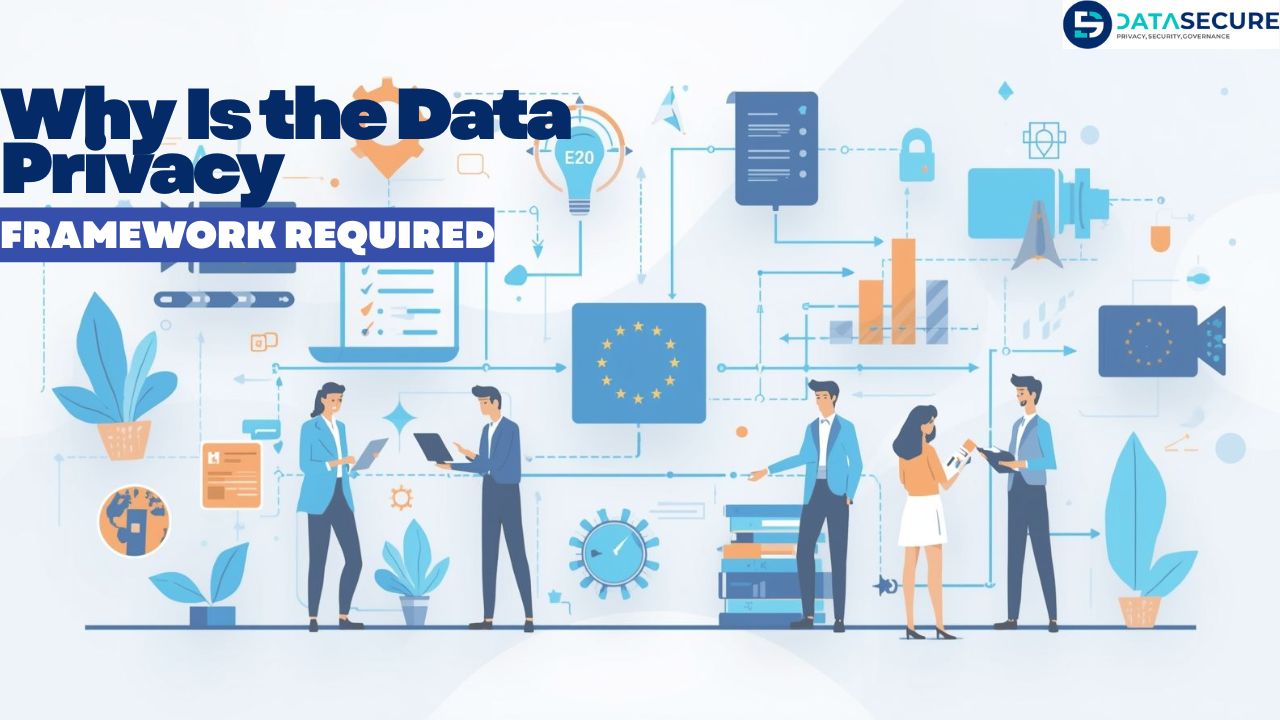
The DPF exists largely because of the structural differences between European and U.S. privacy regimes. European data protection law, particularly the GDPR, treats privacy as a fundamental right and restricts international data transfers unless adequate safeguards are in place. By contrast, the United States relies on sector-specific privacy laws rather than a single comprehensive data protection statute.
Under the GDPR, transfers of personal data outside the European Economic Area are permitted only where the destination country ensures an adequate level of protection or where organizations implement appropriate safeguards. According to European data protection authorities, these safeguards may include adequacy decisions, Standard Contractual Clauses, or Binding Corporate Rules.
Earlier transatlantic transfer frameworks failed to meet these requirements. Safe Harbor was invalidated in 2015, and the EU-U.S. Privacy Shield was struck down in 2020 following the Schrems II judgment. The Court of Justice of the European Union held that Privacy Shield did not sufficiently protect EU citizens from U.S. government surveillance and lacked effective redress mechanisms.
After Schrems II, organizations faced significant uncertainty. Many were forced to rely on Standard Contractual Clauses combined with Transfer Impact Assessments, increasing legal complexity, operational costs, and regulatory exposure. Large-scale data-driven businesses were particularly affected.
The DPF addresses these challenges by providing a streamlined, Commission approved transfer mechanism. Certification enables organizations to demonstrate GDPR compliant transfers, reduce reliance on complex contractual arrangements, and reassure European partners of their commitment to privacy protection. Without such a mechanism, many U.S. businesses would be unable to lawfully access European markets or services dependent on personal data flows.

DPF certification is obtained through a structured self-certification process administered by the U.S. Department of Commerce. The process typically takes four to six weeks and involves several preparatory and procedural steps.
First, organizations must confirm eligibility. Only entities subject to the jurisdiction of the Federal Trade Commission or the Department of Transportation can participate. This excludes certain sectors, such as banking and insurance, which are regulated by other authorities.
Next, organizations must align their internal privacy practices with the DPF Principles. This includes reviewing privacy policies, data handling procedures, security controls, and complaint-handling mechanisms. Organizations must be able to demonstrate compliance with notice and choice requirements, implement safeguards for onward transfers, and provide individuals with access and redress options. Many companies seek external guidance from organizations such as BBB National Programs during this phase.
A mandatory step is the selection of an Independent Recourse Mechanism (IRM). The IRM handles complaints from European individuals. Organizations processing human resources data must designate European Data Protection Authorities as their IRM, while others may choose from approved private-sector providers.
The certification also involves financial commitments, including an annual fee payable to the Department of Commerce, IRM fees, and a contribution to the International Centre for Dispute Resolution, American Arbitration Association.
Once prepared, organizations submit their application through dataprivacyframework.gov. Importantly, organizations may not claim participation in the DPF until certification is formally approved. Misrepresentations are subject to enforcement by the Federal Trade Commission.
An organization that becomes inactive under the EU- U.S. Data Privacy Framework does not regain its certification automatically. Inactive status continues until the organization completes all required corrective actions and is formally reaccepted by the U.S. Department of Commerce. Until reactivation is approved, the organization remains removed from the official Data Privacy Framework List and is not authorized to receive Personal Data under the applicable DPF program.
DPF participation is contingent on annual re-certification with the International Trade Administration (ITA). Failure to re-certify by the prescribed deadline, or voluntary withdrawal from the program, results in removal from the framework and loss of the adequacy based transfer authorization.
Importantly, removal does not terminate existing obligations. All DPF Principles continue to apply to Personal Data received during the period of certification for as long as that data is retained.
Where certification lapses, the ITA requires organizations to submit a Failure to Re-Certify Questionnaire to determine whether the organization intends to withdraw permanently or pursue re-certification. Only organizations that demonstrate renewed compliance and remediation of deficiencies are permitted to re-enter the framework.
Reactivation requires completion of a structured re-certification process, beginning with a review of the organization’s public privacy disclosures. The privacy policy must accurately reflect current data-handling practices and clearly reference compliance with the DPF Principles, applicable enforcement authority, available redress mechanisms, and limitations on onward transfers. Any discrepancy between published statements and operational practices may delay or prevent re-certification.
Organizations must also ensure that an appropriate Independent Recourse Mechanism (IRM) is in place for all Personal Data covered by the certification. Where EU Data Protection Authorities are designated as the IRM, organizations are required to pay the annual USD 50 EU DPA Panel Fee prior to re-certification. This payment is made to the United States Council for International Business (USCIB), which acts as fund custodian. No equivalent panel fee applies for organizations relying on the UK Information Commissioner’s Office or the Swiss Federal Data Protection and Information Commissioner.
Verification of compliance is another core requirement. Organizations must confirm annually that their statements regarding DPF adherence are accurate and that required privacy practices are effectively implemented. This verification may be conducted through internal self-assessment or through an independent external review. In either case, organizations are expected to maintain evidence of training programs, complaint handling procedures, internal audits, and periodic compliance reviews.
Where applicable, organizations must also complete their contribution to the Annex I, Binding Arbitration Fund, which supports arbitration for unresolved complaints. The fund is administered by the International Centre for Dispute Resolution- American Arbitration Association (ICDR-AAA), and payment is a mandatory precondition for re-certification if not previously completed.
Once preparatory requirements are met, all re-certification information must be reviewed and validated within the organization’s DPF account. This includes confirming corporate details, enforcement authority, IRM designation, and scope of data processing. Re-certification is completed through the DPF online dashboard using the “Re-certify” function. Organizations experiencing account access issues are required to resolve them through the DPF support team rather than creating duplicate accounts. Accurate and up-to-date contact information is essential, as the most recently updated contact appears on the public DPF List.
Final submission requires payment of the applicable processing fee, consistent with the initial certification fee schedule. The Department of Commerce reviews submissions for completeness and compliance and may request clarification or remediation within designated timeframes. Failure to respond results in abandonment of the re-certification request. Upon successful review, the organization is formally restored to active status and re-listed under the Data Privacy Framework.
The EU- U.S. Data Privacy Framework provides a vital mechanism for enabling lawful transatlantic data transfers in a highly regulated environment. By establishing enforceable privacy principles and enhanced oversight, the framework seeks to balance commercial data flows with the protection of individual rights.
For U.S. businesses processing European personal data, DPF certification offers tangible benefits, including regulatory certainty, reduced compliance complexity, and strengthened trust with European partners. However, participation requires ongoing commitment. Organizations must embed privacy principles into daily operations, conduct regular reviews, and remain attentive to regulatory developments.
While future legal challenges remain possible, the DPF currently represents the most viable pathway for GDPR-compliant EU- U.S. data transfers. Organizations that invest in proper implementation and maintenance of the framework position themselves for sustainable growth in an increasingly privacy-focused global marketplace.
We at Data Secure (Data Privacy Automation Solution) DATA SECURE - Data Privacy Automation Solution can help you to understand Privacy and Trust while lawfully processing the personal data and provide Privacy Training and Awareness sessions in order to increase the privacy quotient of the organisation.
We can design and implement RoPA, DPIA and PIA assessments for meeting compliance and mitigating risks as per the requirement of legal and regulatory frameworks on privacy regulations across the globe especially conforming to GDPR, UK DPA 2018, CCPA, India Digital Personal Data Protection Act 2023. For more details, kindly visit DPO India – Your outsourced DPO Partner in 2025 (dpo-india.com).
For any demo/presentation of solutions on Data Privacy and Privacy Management as per EU GDPR, CCPA, CPRA or India DPDP Act 2023 and Secure Email transmission, kindly write to us at info@datasecure.ind.in or dpo@dpo-india.com.
For downloading the various Global Privacy Laws kindly visit the Resources page of DPO India - Your Outsourced DPO Partner in 2025
We serve as a comprehensive resource on the Digital Personal Data Protection Act, 2023 (Digital Personal Data Protection Act 2023 & Draft DPDP Rules 2025), India's landmark legislation on digital personal data protection. It provides access to the full text of the Act, the Draft DPDP Rules 2025, and detailed breakdowns of each chapter, covering topics such as data fiduciary obligations, rights of data principals, and the establishment of the Data Protection Board of India. For more details, kindly visit DPDP Act 2023 – Digital Personal Data Protection Act 2023 & Draft DPDP Rules 2025
We provide in-depth solutions and content on AI Risk Assessment and compliance, privacy regulations, and emerging industry trends. Our goal is to establish a credible platform that keeps businesses and professionals informed while also paving the way for future services in AI and privacy assessments. To Know More, Kindly Visit – AI Nexus Your Trusted Partner in AI Risk Assessment and Privacy Compliance|AI-Nexus

.png)
Regus Elegance, Level 2, Elegance Tower, Mathura Road, Jasola, New Delhi – 110025, INDIA

Copyright 2025, AI-Nexus All Rights Reserved.