


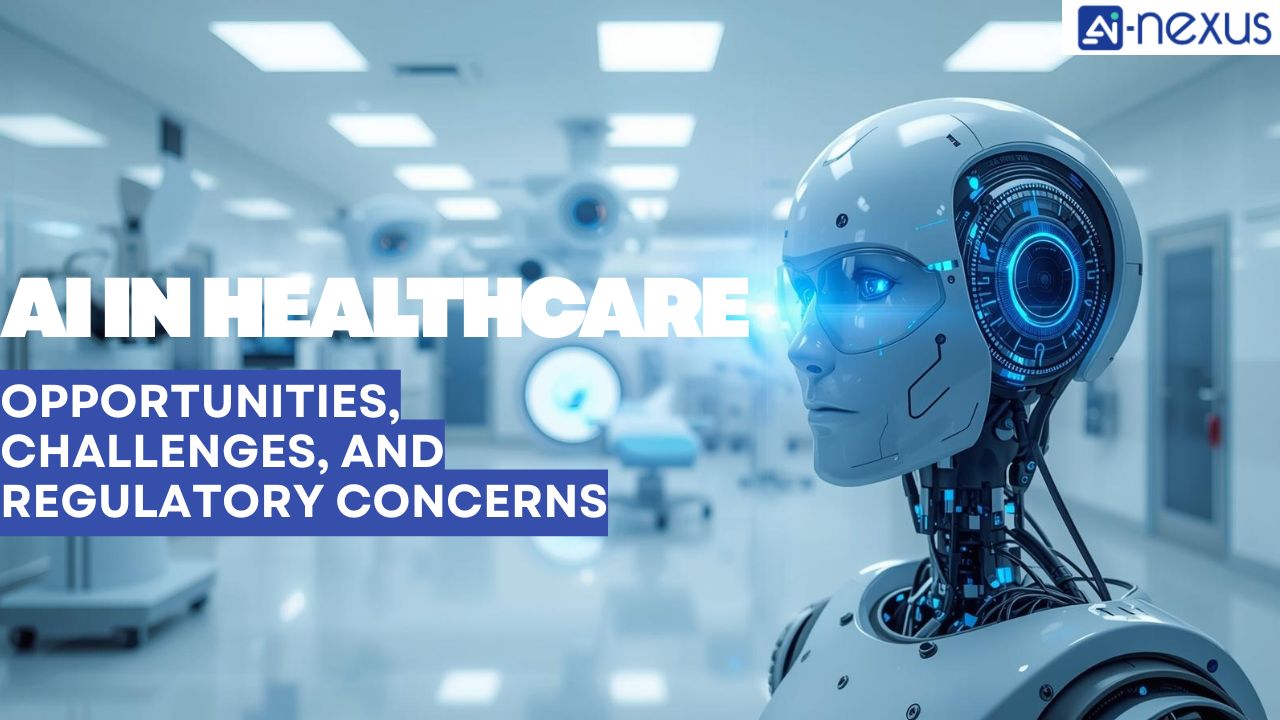
Artificial intelligence (AI) is a powerful and disruptive field with the potential to fundamentally transform the practice of medicine and the delivery of healthcare globally. AI is already reshaping how patients are diagnosed, treated, and monitored, offering solutions to major global challenges, including rising costs and workforce shortages. The strength of AI lies in its ability to quickly analyse vast amounts of clinical data, helping professionals identify disease markers and population health trends that might otherwise be missed.
The opportunities are immense, promising to usher in a new era of precision medicine, where patients receive tailored treatment faster and more accurately. Applications range from using AI to scan radiology images for early detection of cancers and heart disease to improving clinical trial design. AI, often using Natural Language Processing (NLP), is also vital for automating administrative tasks like claims processing and documentation, freeing up providers to focus on patient care.
However, widespread implementation faces formidable challenges. Integration issues with existing clinical workflows and Electronic Health Record (EHR) systems have often been a greater barrier than the accuracy of AI suggestions. Ethical concerns regarding training data, bias, fairness, and model reliability also persist. Crucially, the issue of liability and accountability is pressing: who is responsible if an AI recommendation leads to harm the clinician, the developer, or the hospital? Regulatory bodies are addressing this by increasing oversight, reviewing digital mental health devices, and drafting new policies around generative AI, seeking to strike a balance between encouraging innovation and managing risk. This article examines this landscape of opportunities, implementation challenges, and the necessary regulatory safeguards.
Artificial Intelligence has emerged as one of the most transformative forces in modern healthcare, offering advancements that enhance clinical accuracy, operational efficiency, and patient outcomes. As health systems worldwide adapt to growing patient demands, rising costs, and shortages of skilled professionals, AI provides scalable solutions that improve decision-making, expand access, and foster innovation. From diagnostics and personalised medicine to remote monitoring and national-level health infrastructure, AI presents a wide spectrum of opportunities that are redefining how care is delivered. The major opportunities include:
Enhanced Diagnostic Accuracy: AI significantly improves diagnostic precision by analysing radiology, pathology, ophthalmology, and dermatology images with high accuracy. Machine-learning models can detect early signs of cancer, neurological disorders, and cardiovascular diseases that may be missed by human observation. These systems reduce diagnostic delays, minimise human error, and support clinicians with second-level validation.
Personalised Treatment and Precision Medicine: AI enables customised treatment plans by integrating diverse data points such as genomics, biomarkers, lifestyle variables, and historical medical records. Predictive models help anticipate patient responses to specific therapies, allowing clinicians to optimise dosing, treatment combinations, and disease-management strategies. This level of personalisation is valuable in oncology, rare diseases, and chronic conditions.
Real-Time Remote Patient Monitoring: AI-enabled IoMT devices and wearable sensors continuously track vital parameters like heart rate, glucose levels, oxygen saturation, and sleep patterns. AI algorithms analyse this data to detect anomalies and trigger alerts for early medical intervention. This enhances chronic disease management, reduces hospital readmission rates, and strengthens home-based care, especially for elderly and post-operative patients.
Improved Administrative and Operational Efficiency: Hospitals face heavy administrative burdens, often consuming valuable clinician time. AI-driven automation simplifies tasks such as claims processing, appointment scheduling, electronic medical record (EMR) updates, and discharge instructions. Natural Language Processing (NLP) tools support faster clinical documentation, reducing burnout and improving workflow efficiency across healthcare settings.
Accelerated Drug Discovery and Clinical Research: AI tools rapidly screen drug compounds, analyse molecular interactions, and predict toxicity or efficacy outcomes. This shortens the traditional drug discovery cycle and reduces R&D costs. AI also supports drug repurposing by identifying new therapeutic uses for existing molecules, enabling rapid response during public health emergencies such as pandemics.
Economic Growth, Cost Reduction, and Productivity Gains: AI optimises healthcare delivery by reducing inefficiencies, lowering operational costs, and improving care outcomes. With fewer errors, faster workflows, and better population health, countries gain significant economic benefits through enhanced productivity and reduced disease burden. These macroeconomic gains make AI a catalyst for both healthcare sustainability and national growth.
Bridging Healthcare Access Gaps in India: India continues to face a shortage of skilled doctors and specialists, particularly in rural and remote regions. AI-assisted diagnostics, teleconsultation platforms, and mobile health applications help overcome these disparities by delivering specialist-level insights to frontline workers. AI-enabled screening tools for tuberculosis, diabetic retinopathy, and maternal risks are also improving early detection across underserved populations.
Strengthening Public-Private Innovation Ecosystems: AI is encouraging collaboration between government health programmes, startups, research institutions, and corporates. Initiatives under Digital India, ABDM, and national AI missions promote scalable digital health solutions, AI-based registries, and population-level disease analytics. These partnerships support innovation while improving governance, interoperability, and system-wide resilience.
Data Quality, Interoperability, and Standardisation: AI systems depend on large volumes of accurate, structured, and interoperable health data. However, healthcare data is often https://www.who.int/publications/i/item/9789240029200fragmented across institutions and stored in incompatible formats. Inconsistent data quality and lack of standardisation reduce the reliability of AI outputs and limit large-scale deployment across healthcare systems.
Algorithmic Bias and Health Inequities: AI models may replicate or amplify existing biases present in training datasets. When datasets underrepresent certain populations, AI-driven decisions can result in unequal diagnostic accuracy or inappropriate treatment recommendations. In healthcare, such bias poses serious ethical and human rights concerns, particularly for marginalised and vulnerable groups.
Data Privacy, Confidentiality, and Cybersecurity Risks: Healthcare AI systems process highly sensitive personal, biometric, and genetic data. Increased digitisation and interconnected systems expose healthcare organisations to cyberattacks and data breaches. Ensuring lawful data processing, informed consent, and secure data storage remains a major challenge in the absence of consistent global standards.
Lack of Transparency and Explainability: Many AI models function as “black boxes,” offering limited visibility into how predictions or recommendations are generated. This lack of explainability undermines clinician trust and complicates medico-legal accountability. In high-risk healthcare decisions, explainable AI is essential to support informed consent and clinical responsibility.
High Implementation Costs and Skills Gap: Developing and maintaining AI systems require significant financial investment, advanced digital infrastructure, and specialised expertise. Many healthcare institutions, especially in developing economies, face shortages of skilled personnel capable of integrating AI into clinical workflows. This skills gap slows adoption and increases the risk of improper implementation.
Regulatory Uncertainty and Ethical Accountability: The absence of harmonised legal frameworks governing AI validation, liability, and accountability creates uncertainty for healthcare providers and developers. Ethical issues such as responsibility for AI-driven errors and standards for clinical approval remain unresolved, discouraging widespread adoption.
Absence of Comprehensive and Harmonised AI Regulations: A major regulatory concern in the deployment of AI in healthcare is the lack of comprehensive and harmonised legal frameworks. While AI tools increasingly influence diagnostics and treatment decisions, most jurisdictions rely on fragmented regulations originally designed for traditional medical devices or software. These frameworks often fail to address the adaptive and self-learning nature of AI systems, creating uncertainty around regulatory classification, approval, and oversight.
Accountability and Liability for AI-Assisted Medical Decisions: Assigning liability when AI systems contribute to clinical errors remains legally ambiguous. It is unclear whether responsibility lies with healthcare professionals, hospitals, AI developers, or data providers. This lack of clarity complicates medical negligence claims and risk allocation, particularly where clinicians rely on AI-generated recommendations. The absence of defined liability standards discourages trust and adoption of AI tools in high-risk healthcare environments.
Transparency, Explainability, and Informed Consent: Many AI models operate as “black boxes,” making it difficult to explain how decisions or predictions are generated. From a regulatory perspective, this undermines informed consent, patient autonomy, and clinical accountability. Explainability is increasingly recognised as a regulatory requirement in healthcare, yet enforceable standards for explainable AI remain limited across jurisdictions.
Data Protection, Consent, and Secondary Use of Health Data: AI systems rely on large-scale processing of sensitive personal data, including biometric and genetic information. Regulatory concerns arise around lawful data collection, consent validity, purpose limitation, and secondary use of data for AI training. Compliance with stringent data protection regimes, particularly in cross-border data flows, remains a complex legal challenge.
Safety Validation and Continuous Learning Systems: Traditional regulatory approval models are designed for static medical products, whereas AI systems may continuously evolve through machine learning. This creates challenges in determining when re-approval, re-certification, or post-market surveillance is required. Regulators continue to struggle with monitoring real-world performance and managing risks associated with algorithmic updates.
Ethical Oversight and Human-in-the-Loop Requirements: Regulators increasingly emphasise the need for DATA SECUhuman oversight over AI systems in healthcare. However, defining the extent of permissible automation remains unresolved. Ethical concerns include over-reliance on AI, erosion of clinical judgment, and diminished patient trust. Ensuring that AI functions strictly as a decision-support tool is a continuing regulatory priority.
In India, regulatory challenges arise from the absence of AI-specific healthcare legislation. The Digital Personal Data Protection Act, 2023 governs consent, purpose limitation, and data security, directly impacting AI-driven healthcare systems, but it does not explicitly address automated decision-making, algorithmic transparency, or AI liability.
Additionally, AI-based medical software may be regulated as Software as a Medical Device (SaMD) under the Central Drugs Standard Control Organisation (CDSCO). However, India currently lacks detailed guidance on AI validation, post-deployment monitoring, and continuous learning algorithms. This regulatory gap creates uncertainty for healthcare providers and developers, highlighting the need for India-specific AI healthcare governance aligned with global best practices.
Artificial Intelligence has the potential to redefine healthcare delivery by improving diagnostic accuracy, personalising treatment, expanding access, and enhancing system efficiency. However, its successful integration depends not only on technological advancement but also on addressing critical challenges related to data quality, bias, transparency, skills gaps, and system readiness. Equally important are robust regulatory frameworks that ensure accountability, patient safety, and ethical use without stifling innovation. In the Indian context, the absence of AI-specific healthcare regulation underscores the need for tailored governance aligned with global best practices. A balanced, patient-centric, and well-regulated approach is essential to harness AI’s transformative potential responsibly and sustainably.
We at Data Secure (Data Privacy Automation Solution) DATA SECURE - Data Privacy Automation Solution can help you to understand EU GDPR and its ramificationsand design a solution to meet compliance and the regulatoryframework of EU GDPR and avoid potentially costly fines.
We can design and implement RoPA, DPIA and PIA assessments for meeting compliance and mitigating risks as per the requirement of legal and regulatory frameworks on privacy regulations across the globe especially conforming to GDPR, UK DPA 2018, CCPA, India Digital Personal Data Protection Act 2023. For more details, kindly visit DPO India – Your outsourced DPO Partner in 2025 (dpo-india.com).
For any demo/presentation of solutions on Data Privacy and Privacy Management as per EU GDPR, CCPA, CPRA or India DPDP Act 2023 and Secure Email transmission, kindly write to us at info@datasecure.ind.in or dpo@dpo-india.com.
For downloading the various Global Privacy Laws kindly visit the Resources page of DPO India - Your Outsourced DPO Partner in 2025
We serve as a comprehensive resource on the Digital Personal Data Protection Act, 2023 (Digital Personal Data Protection Act 2023 & Draft DPDP Rules 2025), India's landmark legislation on digital personal data protection. It provides access to the full text of the Act, the Draft DPDP Rules 2025, and detailed breakdowns of each chapter, covering topics such as data fiduciary obligations, rights of data principals, and the establishment of the Data Protection Board of India. For more details, kindly visit DPDP Act 2023 – Digital Personal Data Protection Act 2023 & Draft DPDP Rules 2025
We provide in-depth solutions and content on AI Risk Assessment and compliance, privacy regulations, and emerging industry trends. Our goal is to establish a credible platform that keeps businesses and professionals informed while also paving the way for future services in AI and privacy assessments. To Know More, Kindly Visit – AI Nexus Your Trusted Partner in AI Risk Assessment and Privacy Compliance|AI-Nexus

.png)
Regus Elegance, Level 2, Elegance Tower, Mathura Road, Jasola, New Delhi – 110025, INDIA

Copyright 2025, AI-Nexus All Rights Reserved.